Real Traders. Real Stories. Real Lessons.

Honest Trading Journeys From Crypto, Stocks and Forex Traders.

Trading stories

Real Lessons From The People Who Lived Them

Stop following "get rich quick" gurus and start learning from real-world data. From accidental liquidations to disciplined breakthroughs, discover the honest truth behind every trade.

storyimage
Stocks

My first trading loss using the Upstox app – A Beginner’s Lesson

By Anonymous User - 4 min read

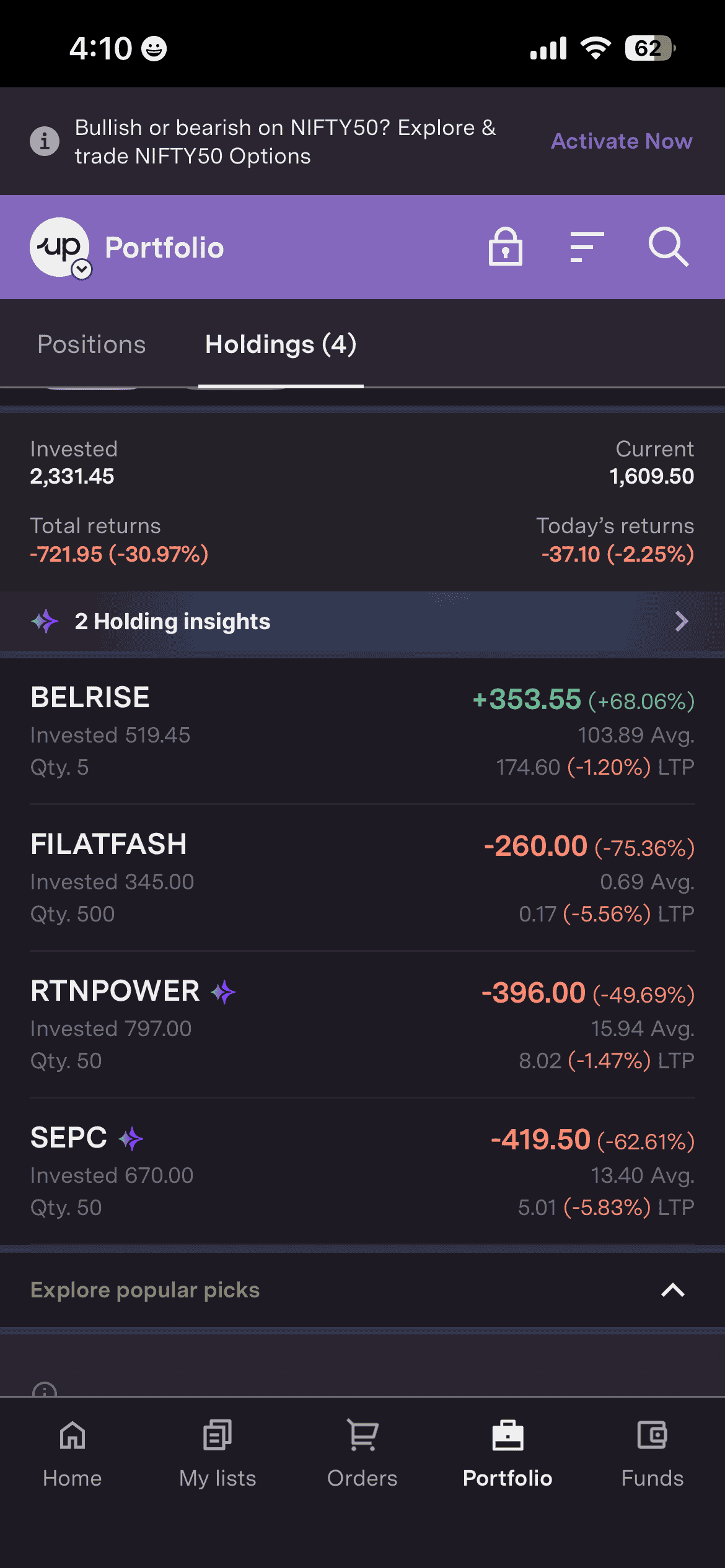
IntroductionWhen I started trading in the stock market, I was excited about the possibility of making quick profits. Like many beginners, I downloaded the Upstox trading app and began investing small amounts of money.However, my first real experience in trading was not profit — it was a loss. This experience taught me some important lessons that every beginner trader should understand before entering the market.My Portfolio SnapshotAt one point my portfolio looked like this:Total Invested: ₹ 2,331Current Value: ₹ 1,609Total Loss: ₹ 721 (-30%)For a beginner, even a small loss can feel discouraging. But in reality, this is a common experience for many new traders.Stocks I Invested InHere are the stocks from my portfolio:1. BELRISEThis was the only stock that performed well in my portfolio.Invested: ₹ 519Profit: +68%This taught me that some stocks can perform well, but one winner cannot always cover multiple losing trades.2. FILATFASHThis stock dropped significantly after I bought it.Loss: -75%This happened because I invested without proper research and followed market hype.3. RTNPOWERLoss: nearly -50%I realized that cheap stocks are not always good investments. Many beginners buy low-priced stocks thinking they will multiply quickly.4. SEPCLoss: more than -60%This was another mistake where I entered the trade without understanding the company fundamentals.Mistakes I Made as a Beginner TraderAfter reviewing my trades, I realized several mistakes:1. Buying Penny StocksMany beginners are attracted to low-priced stocks, but these often carry higher risk.2. No Proper ResearchI invested based on market buzz rather than analyzing the company or chart.3. Lack of Risk ManagementI did not use stop-loss orders, which could have limited my losses.4. Emotional TradingWhen prices dropped, I held the stocks hoping they would recover quickly.Final ThoughtsLosses are part of the trading journey. My experience using the Upstox platform taught me that the stock market rewards knowledge, patience, and discipline.Instead of quitting after losses, beginner traders should treat them as learning opportunities and improve their strategies.

Read Story
whytrader

Why TraderTruths?

  • Learn from real trading experiences
  • Discover mistakes traders made
  • Understand trading psychology
  • Improve your decision-making
  • Follow Proven Risk Management Techniques
  • Avoid Emotional Trading Decisions
  • Build Discipline and Consistency

Why TraderTruths Exists

Trading is often shown as an easy path to quick profits, but the reality is very different. Many traders experience losses, emotional stress, and difficult learning curves before finding consistency. TraderTruths was created to bring transparency to the trading world by sharing real trading stories, lessons, and experiences from traders across global markets.

Our platform allows traders to anonymously share their journeys in crypto trading, forex trading, and stock market trading. By reading real experiences from other traders, beginners and experienced traders alike can learn valuable lessons about risk management, trading psychology, strategy development, and common trading mistakes.

TraderTruths exists to create a community-driven knowledge base where traders can learn from both success and failure. Every story shared on the platform helps others understand the real challenges of trading and make better decisions in financial markets.

Through honest experiences and practical insights, TraderTruths aims to help traders improve their discipline, avoid costly mistakes, and develop a long-term trading mindset.

Trading Image

1000+

Stories Shared

30+

Countries

5000+

Readers

Our Blogs

trading story
Trading Success Stories
June 3, 2026

Trading Success Stories: How Real Traders Achieved Consistent Profits

Every trader dreams of becoming consistently profitable.Whether someone enters the market through forex, cryptocurrency, stocks, or commodities, the goal is usually the same: achieve steady results, grow capital, and gain financial freedom. Yet most traders quickly discover that success is much harder than social media makes it seem.Behind every profitable trader is a journey filled with mistakes, losses, setbacks, and lessons learned the hard way.That’s why trading success stories are so valuable. They provide more than inspiration. They reveal the habits, mindset, and discipline that separate long-term winners from traders who eventually give up.At TraderTruths, we believe that understanding real trading journeys helps traders develop realistic expectations and learn from the experiences of others. The truth is that consistent profitability rarely happens overnight. It is usually built through patience, risk management, continuous learning, and emotional discipline.Let’s explore some of the most well-known trading success stories and the lessons traders can take from them.Why Trading Success Stories MatterMany people enter the markets with unrealistic expectations.They see screenshots of profitable trades and stories of overnight success. What they often don’t see are the years of preparation, mistakes, and learning that happened before those profits appeared.Real trading success stories matter because they show:The reality behind long-term profitabilityHow successful traders manage riskThe importance of emotional disciplineWhy patience often beats aggressive tradingHow setbacks can become valuable learning opportunitiesMost successful traders were not born with special abilities. They developed their skills through experience and continuous improvement.George Soros: The Power of Market UnderstandingWhen people discuss legendary traders, George Soros is usually one of the first names mentioned.His most famous trade happened in 1992 during what became known as Black Wednesday. Soros believed the British Pound was significantly overvalued and took a massive short position against it.When the British government eventually withdrew the currency from the European Exchange Rate Mechanism, the pound fell sharply.The result was extraordinary.Soros reportedly earned approximately $1 billion from the trade in a single day.While many people focus on the profit, the real lesson from this trading success story is preparation.Soros succeeded because he deeply understood:Macroeconomic conditionsCurrency valuationGovernment policiesMarket psychologyHis success was not luck. It was the result of research, conviction, and strategic thinking.Bill Lipschutz: The Importance of Risk ManagementOne of the most fascinating trading success stories comes from Bill Lipschutz.While attending college, he turned a relatively small investment into hundreds of thousands of dollars. However, one poor decision wiped out much of his gains.For many traders, that kind of loss would end the journey.Instead, Bill treated the setback as an education.He learned one of the most important lessons in trading:Risk management is more important than any single winning trade.Throughout his career, he focused heavily on:Capital preservationEmotional controlControlled position sizingConsistent executionEventually, he became one of the most respected forex traders in the world.His story reminds traders that protecting capital is often more important than chasing profits.Stanley Druckenmiller: Discipline and FlexibilityStanley Druckenmiller is another trader frequently mentioned among the greatest market participants of all time.He worked alongside George Soros during the famous Black Wednesday trade and later built an impressive track record through his own investment firm.What made Druckenmiller unique was his ability to balance conviction with flexibility.He understood that markets change constantly.Instead of becoming emotionally attached to opinions, he adapted when conditions changed.This approach helped him:Manage risk effectivelyIdentify major opportunitiesAvoid stubborn decision-makingStay aligned with market trendsOne of the key lessons from his trading success story is that successful traders remain flexible while maintaining discipline.Paul Tudor Jones: Learning to Anticipate OpportunitiesPaul Tudor Jones built his reputation through a strong understanding of macroeconomic trends and market behavior.He became particularly famous for predicting the stock market crash of 1987.Instead of reacting emotionally to market events, he focused on studying patterns, economic conditions, and investor behavior.His success demonstrates the importance of preparation and analysis.Successful traders often spend far more time researching and planning than they do actually placing trades.This is one reason many beginners struggle.They focus heavily on execution while neglecting preparation.Common Traits Found in Trading Success StoriesAlthough every trader follows a unique path, most successful traders share several important characteristics.Discipline Is Always PresentIf there is one lesson repeated throughout nearly every trading success story, it is the importance of discipline.Successful traders:Follow their plansRespect risk limitsAvoid emotional decisionsRemain patient during difficult periodsDiscipline is often what separates consistency from chaos.Risk Management Comes FirstMany traders focus entirely on making money.Profitable traders focus first on avoiding unnecessary losses.Strong risk management includes:Using stop lossesManaging position sizesLimiting exposureProtecting capitalThe ability to survive difficult market conditions often determines long-term success.Continuous Learning Never StopsMarkets constantly evolve.Successful traders understand that learning never ends.They study:Economic trendsTechnical analysisMarket psychologyTrading performanceHistorical market behaviorMany of the most successful traders remain lifelong students of the market.The Role of Psychology in Trading Success StoriesTrading is not only a technical challenge.It is also a psychological challenge.Many traders lose money not because they lack knowledge, but because they struggle with emotions.Common psychological obstacles include:FearGreedImpatienceOverconfidenceRevenge tradingSuccessful traders learn how to manage these emotions rather than allowing emotions to control their decisions.At TraderTruths, many shared experiences reveal that emotional growth often becomes the turning point in a trader’s journey.Learning to control yourself is often harder than learning to read a chart.Why Most Traders Never Reach ConsistencyMany traders fail because they focus on the wrong things.Instead of developing discipline, they search endlessly for:Secret indicatorsPerfect strategiesGuaranteed setupsThe reality is that consistency comes from mastering fundamentals.Common reasons traders struggle include:Poor risk managementLack of patienceEmotional decision-makingOvertradingUnrealistic expectationsThe traders who eventually succeed usually stop searching for shortcuts and start focusing on process.Trading Success Stories Are Built Over TimeOne of the biggest misconceptions about trading is that success happens quickly.In reality, many profitable traders spent years developing their skills.They experienced:Losing streaksStrategy failuresEmotional setbacksMarket uncertaintyWhat separated them from others was persistence.They continued learning, adapting, and improving.Success was rarely the result of one great trade.It was the result of hundreds or thousands of decisions made correctly over time.What New Traders Can Learn From Trading Success StoriesFor beginners, the biggest takeaway is simple:Successful trading is possible, but it requires work.The most valuable lessons include:Focus on learning before earning.Protect capital at all costs.Accept losses as part of the process.Develop emotional discipline.Create a structured trading plan.Stay patient during difficult periods.Never stop improving your skills.These principles appear repeatedly across nearly all major trading success stories.Share Your Trading Story and Help Others LearnEvery trader has experiences worth sharing.You do not need to be a famous investor or manage millions of dollars to help someone else.Sometimes the most valuable lessons come from:Recovering from lossesOvercoming emotional challengesDeveloping better disciplineLearning from mistakesAt TraderTruths, we encourage traders from all backgrounds to share their experiences.Share your story here:https://www.tradertruths.com/sharestory.phpYour story may provide exactly the lesson another trader needs to hear.Whether your journey involves success, setbacks, or important discoveries, your experience can help others become better traders.ConclusionThe best trading success stories are not simply about money.They are about growth.They show how traders develop discipline, manage risk, overcome emotional challenges, and continue improving despite setbacks.George Soros, Bill Lipschutz, Stanley Druckenmiller, and Paul Tudor Jones all followed different paths. Yet they shared common traits: preparation, discipline, patience, adaptability, and continuous learning.For traders seeking consistency, these lessons remain just as relevant today as they were decades ago.At TraderTruths, we believe every trading journey contains valuable insights. By learning from the experiences of others and sharing our own lessons, we can build a stronger and more informed trading community.Remember: successful trading is not about finding shortcuts. It is about building habits that create long-term consistency.FAQsWhat are trading success stories?Trading success stories are real-life experiences from traders who achieved consistent profitability through discipline, risk management, and continuous learning.Can beginners become successful traders?Yes. Many successful traders started as beginners and improved through education, practice, patience, and experience.What is the most important lesson from trading success stories?Risk management is one of the most common lessons. Successful traders focus on protecting capital before pursuing profits.Do successful traders still experience losses?Absolutely. Even the best traders lose trades. The difference is that they manage losses effectively and remain disciplined.How long does it take to become a consistently profitable trader?The timeline varies for every individual, but most traders require months or years of learning, practice, and experience before achieving consistency.Where can traders share their own experiences?Traders can share their stories on TraderTruths and help other traders learn valuable lessons from real-world trading experiences.Follow us on our social media pages: Facebook, Instagram, X, Linkedin & Youtube.

trading story
Success Story of Stock Trader
June 1, 2026

Real Trading Stories: Share Your Experience and Help Other Traders

Every trader has a story.Some stories begin with excitement and early success. Others begin with painful losses, emotional mistakes, and hard-earned lessons. Some traders discover consistency after years of trial and error, while others are still searching for their edge in the markets.What makes trading unique is that no two journeys are exactly the same.Whether you trade crypto, forex, stocks, indices, or commodities, your experiences contain valuable insights that could help someone else avoid a costly mistake or find a better path forward.That is why real trading stories matter.At TraderTruths, we believe that honest experiences often teach more than expensive courses, social media screenshots, or motivational videos. Behind every trade is a lesson, and behind every lesson is a story worth sharing.Why Real Trading Stories Matter in Today's Trading WorldThe internet is full of trading content.Every day, traders are exposed to:Profit screenshotsLuxury lifestyle posts"Secret" strategiesTrading gurus promising easy successViral social media winsWhat often gets left out are the difficult parts of trading.Very few people talk openly about:Blown accountsEmotional tradingFear during market crashesOvertradingPoor risk managementRecovery after lossesThis creates a misleading picture of what trading actually looks like.Real trading stories help balance that narrative by showing the complete journey, not just the highlights.They remind traders that losses, mistakes, and setbacks are normal parts of growth.The Most Valuable Trading Lessons Often Come From FailureMany successful traders will tell you the same thing:Their biggest breakthroughs came after their biggest mistakes.Some traders learn the importance of risk management after suffering a major drawdown. Others learn patience after years of chasing trades and overtrading every market move.Failure is rarely enjoyable, but it often becomes the best teacher.Some common trading lessons shared by experienced traders include:Risk Management Is More Important Than Finding the Perfect StrategyMany beginners spend months searching for the perfect indicator or setup.Eventually, they discover that poor risk management can destroy even the best strategy.Learning to:Use stop lossesControl position sizesAvoid excessive leverageProtect capitaloften matters more than finding the next winning trade.Emotional Control Separates Consistent Traders From Struggling TradersFear and greed affect everyone.The difference is how traders respond to those emotions.Many real trading stories reveal that emotional decisions caused more damage than bad market analysis ever did.Examples include:Revenge trading after lossesPanic selling during crashesFOMO buying after price spikesRefusing to accept small lossesLearning emotional discipline is one of the most important trading lessons any trader can learn.Real Trading Stories Create a Stronger Trading CommunityTrading can be surprisingly lonely.Most traders spend hours researching markets, analyzing charts, and managing positions by themselves.When losses occur, many traders keep those experiences private.The result is that people often feel like they are struggling alone.Reading real trading stories changes that.It helps traders understand:Others have faced similar challengesLosses happen to everyoneSuccess rarely happens overnightGrowth takes timeA community built around honesty creates a healthier environment for learning.At TraderTruths, our goal is to build exactly that kind of community.The Trading Lessons Hidden Behind Winning TradesWhen people hear successful trading stories, they often focus on profits.But profits are usually the result of deeper lessons learned over time.Behind many winning trades are:Years of experienceCountless mistakesEmotional setbacksContinuous learningFor example, a trader who successfully navigates a crypto bull market may have previously lost money by chasing hype during earlier cycles.A forex trader who consistently follows their trading plan may have learned discipline after years of emotional decision-making.The success becomes interesting, but the trading lessons behind that success are often far more valuable.Why Beginners Need Real Trading Stories More Than Trading SignalsMany new traders believe they need:Better indicatorsBetter signalsBetter entriesWhile those things can help, they are not the complete solution.What beginners often need most is perspective.Reading real trading stories helps new traders understand:What realistic expectations look likeHow experienced traders thinkWhat mistakes to avoidWhy patience mattersInstead of learning every lesson through personal losses, traders can learn from the experiences of others.That can save both money and frustration.Every Trader Has a Story Worth SharingSome traders hesitate to share their experiences because they believe their journey is not impressive enough.They think:"I haven't made huge profits.""I'm still learning.""I've made too many mistakes.""Nobody would be interested."In reality, those are often the most valuable stories.A beginner who shares how they recovered from emotional trading may help another trader facing the same challenge.A trader who explains how poor risk management damaged their account may prevent someone else from making the same mistake.You do not need to be a millionaire trader to have a meaningful story.Your experience could provide exactly the lesson someone else needs.What Kind of Stories Can You Share?At TraderTruths, we welcome stories from traders at every stage of their journey.Examples include:Success StoriesYour first profitable yearA breakthrough trading momentDeveloping a profitable routineBuilding consistencyFailure StoriesBlown accountsEmotional trading mistakesOvertrading experiencesLessons learned from lossesRecovery StoriesRebuilding after major lossesRecovering confidenceImproving risk managementReturning stronger after setbacksPersonal Trading LessonsMarket psychology insightsDiscipline improvementsStrategy developmentMindset shiftsEvery experience has the potential to help another trader.Why TraderTruths ExistsTraderTruths was created because the trading industry often focuses too much on perfection and not enough on reality.The truth is that most traders experience:WinsLossesDoubtGrowthFrustrationSuccessWe believe there is value in every stage of that journey.Our mission is simple:To create a platform where traders can learn from honest experiences instead of unrealistic promises.By sharing real trading stories, traders help build a community-driven knowledge base that benefits everyone.Share Your Trading Story and Help Other TradersYour story could do more than you realize.A lesson you learned after a difficult loss could help another trader avoid making the same mistake.An insight gained through years of experience could save someone months of frustration.A moment of perseverance could inspire another trader not to quit.Trading is full of challenges, but sharing experiences makes the journey easier for everyone.If you have a story to tell, consider sharing it through the TraderTruths Share Your Trading Story page.Your experience matters.Your lessons matter.And your story might help another trader take the next step forward.ConclusionReal trading stories offer something that charts, indicators, and trading courses often cannot: genuine human experience.They reveal the emotional side of trading, the difficult moments behind success, and the valuable lessons learned through mistakes and perseverance.At TraderTruths, we believe that every trader has something meaningful to contribute. Whether your journey includes success, failure, recovery, or growth, your experience can help others become smarter, more disciplined traders.The best trading lessons are often found in real experiences.And your story could be the next lesson someone needs to hear.FAQsWhat are real trading stories?Real trading stories are authentic experiences shared by traders about their successes, failures, challenges, and lessons learned while trading financial markets.Why are real trading stories important?They provide practical insights, emotional lessons, and realistic expectations that can help traders avoid common mistakes and improve their decision-making.What trading lessons can beginners learn from other traders?Beginners can learn about risk management, emotional discipline, trading psychology, strategy development, and common mistakes through shared experiences.Do I need to be a successful trader to share my story?No. Some of the most valuable stories come from traders who experienced setbacks, losses, and important learning moments.Can sharing my trading experience help others?Absolutely. Your story may help another trader avoid costly mistakes, improve discipline, or gain confidence during difficult periods.Where can I share my trading story?You can share your experience through the TraderTruths Share Your Trading Story page and contribute valuable insights to the trading community.For more you can follow us on our social media pages: Facebook, Instagram, X, Linkedin & Youtube.

trading story
Trading Loss Recovery
May 29, 2026

Trading Loss Recovery: How to Recover from a Big Trading Loss

Every trader remembers their worst loss.Sometimes it happens suddenly during a market crash. Sometimes it comes after a series of emotional decisions that slowly spiral out of control. No matter how it happens, a major trading loss can shake your confidence in ways most people outside trading never truly understand.One bad trade can leave traders questioning everything:Their strategyTheir disciplineTheir emotional controlEven whether they should continue trading at allAt TraderTruths, many traders openly share experiences about the emotional impact of losing money in crypto, forex, and stock markets. And one thing becomes clear very quickly: almost every experienced trader has faced painful losses at some point in their journey.The difference is not whether losses happen.The difference is how traders respond afterward.This is where trading loss recovery becomes incredibly important. Recovering from a large loss is not only about rebuilding money — it’s about rebuilding confidence, discipline, and emotional stability.Why Trading Loss Recovery Feels So DifficultLarge trading losses affect more than just your account balance.They affect your mindset.After a major loss, many traders experience:Fear of entering new tradesAnxiety during market volatilitySelf-doubtEmotional exhaustionRevenge trading urgesSome traders become overly cautious and stop taking opportunities completely. Others react in the opposite way and try to recover losses immediately by increasing risk.Both reactions are dangerous.One of the hardest parts of trading loss recovery is accepting that emotional damage often lasts longer than financial damage.That’s why the recovery process needs patience and structure.Trading Loss Recovery Starts With Honest Self-ReflectionOne of the biggest mistakes traders make after losing money is avoiding self-analysis.Many traders blame:Market manipulationNews eventsBrokersVolatilityWhile external factors can influence trades, long-term growth only begins when traders honestly evaluate their own decisions.After any significant loss, experienced traders usually ask themselves:Did I follow my strategy properly?Did emotions influence my trade?Was my risk management appropriate?Did I ignore warning signs?Was I overconfident?At TraderTruths, many real trader experiences show that painful losses often become turning points for improvement.The market has a way of exposing emotional weaknesses traders didn’t know they had.Trading Loss Recovery Through Post-Trade AnalysisOne of the most effective ways to recover from losses is through detailed trade review.Professional traders rarely ignore losing trades. Instead, they study them carefully.A strong post-trade analysis helps traders identify:Emotional mistakesPoor entriesWeak risk managementMarket misreadsStrategy flawsSometimes traders discover the loss happened because they:Ignored stop lossesEntered trades impulsivelyUsed excessive leverageTraded during emotional stressOther times, the setup was correct and the trade simply failed naturally.Understanding the difference matters.Without analysis, traders often repeat the same mistakes over and over again.Why Keeping a Trading Journal Helps Trading Loss RecoveryOne habit many profitable traders share is maintaining a trading journal.This may sound simple, but it becomes extremely valuable during trading loss recovery.A journal allows traders to track:Entry reasonsExit decisionsEmotional stateMarket conditionsMistakesWinning patternsOver time, patterns begin to appear.For example:Some traders lose money mostly during high volatilityOthers struggle after winning streaksSome make emotional decisions late at nightOthers overtrade after lossesA journal creates self-awareness, and self-awareness improves discipline.At TraderTruths, many traders mention that journaling helped them recognize emotional habits they previously ignored.Trading Loss Recovery Requires Smaller Position SizesOne major mistake traders make after a big loss is trying to recover too quickly.This usually leads to:OvertradingEmotional entriesLarger risksEven bigger lossesInstead of rushing back aggressively, experienced traders often reduce position sizes temporarily.For example:A trader risking 5% per trade may reduce risk to 1% or 2%A crypto trader may avoid leverage for a whileA forex trader may focus only on high-quality setupsThis approach helps rebuild confidence gradually while reducing emotional pressure.Trading loss recovery is not a race.Slow recovery is often healthier than emotional recovery attempts.Why Emotional Discipline Matters in Trading Loss RecoveryAfter a large loss, emotions become extremely dangerous.Fear can stop traders from taking good opportunities. Greed can push traders into revenge trading. Frustration can lead to impulsive decisions.This is why emotional discipline becomes one of the most important parts of trading loss recovery.Some helpful habits include:Taking breaks after lossesAvoiding emotional market decisionsReducing screen time temporarilyFollowing pre-planned setups onlyAccepting losses as part of tradingMany traders believe success comes from perfect strategies. In reality, emotional stability often matters more.At TraderTruths, many trader stories reveal that emotional growth played a larger role in long-term success than technical indicators ever did.Trading Loss Recovery and the Importance of Risk ManagementPoor risk management is one of the biggest reasons traders struggle to recover after losses.Many traders risk too much because they believe:“This trade can’t fail.”“I’ll recover everything quickly.”“I just need one good trade.”That mindset creates dangerous situations.Experienced traders understand:Protecting capital is the first priority.Good risk management includes:Using stop lossesAvoiding excessive leverageManaging position sizesDiversifying riskAccepting small losses earlyOne controlled loss is manageable.One emotional oversized loss can destroy months of progress.Trading Loss Recovery Through Gradual Confidence BuildingConfidence rarely returns immediately after a major setback.It usually returns slowly through:Small consistent winsBetter disciplineControlled emotionsFollowing a structured processOne smart approach many traders use is scaling positions gradually.For example:Starting with smaller tradesIncreasing size only after consistency improvesTaking partial profitsAvoiding unnecessary risk during volatile conditionsThis creates stability without overwhelming emotional pressure.Many successful traders rebuilt confidence slowly after difficult periods instead of forcing aggressive recoveries.Why Limit Orders and Stop Losses Matter During RecoveryDuring emotional periods, decision-making often becomes weaker.This is why tools like:Stop lossesLimit ordersTake profit levelsbecome especially important during trading loss recovery.These tools help traders:Remove emotional reactionsFollow structured plansAvoid impulsive decisionsProtect capital automaticallyMarkets move quickly, especially in crypto and forex trading.Planning exits before entering trades helps reduce emotional stress significantly.The Hidden Psychological Side of Trading Loss RecoveryOne thing many traders don’t realize is that large losses often create emotional trauma.After painful losses, traders may:Fear clicking the buy buttonHesitate during good setupsConstantly second-guess decisionsBecome emotionally drainedThis is normal.Trading involves money, and money naturally creates emotional attachment.Recovery takes time.At TraderTruths, many traders openly discuss how psychological recovery became harder than financial recovery after major losses.That honesty matters because it reminds traders they are not alone.What Successful Traders Learn From Big LossesAlthough painful, major losses often teach powerful lessons.Many experienced traders eventually realize:Risk management matters more than excitementEmotional discipline beats impulsive tradingConsistency matters more than fast profitsPatience creates better opportunitiesSome of the strongest traders today became disciplined only after experiencing difficult setbacks earlier in their journey.Failure often becomes the turning point where traders stop gambling emotionally and start approaching trading professionally.Why Real Trader Experiences MatterOne reason platforms like TraderTruths exist is because honest trader experiences help others learn from real situations.Trading can feel isolating after a major loss.Reading authentic stories helps traders understand:Losses happen to everyoneRecovery is possibleEmotional struggles are normalGrowth takes timeSometimes another trader’s story provides the exact lesson someone else needs during a difficult period.ConclusionLarge trading losses can feel emotionally overwhelming, especially for traders who tie confidence closely to market performance. But losses do not automatically define a trader’s future.What matters most is the response afterward.Successful trading loss recovery requires:Honest self-reflectionEmotional disciplineRisk managementPatienceGradual rebuildingAt TraderTruths, traders regularly share honest experiences about setbacks, emotional struggles, and recovery journeys across crypto, forex, and stock markets.The truth is that many successful traders once experienced painful losses too. Those moments often became the lessons that shaped stronger habits and better decision-making later on.If you’ve experienced important lessons during your own trading journey, consider sharing your experience on the TraderTruths Share Story Page. Your story could genuinely help another trader recover smarter after a difficult setback.FAQsWhat is trading loss recovery?Trading loss recovery refers to the process of rebuilding financially and emotionally after experiencing significant losses in trading.Why do traders struggle emotionally after big losses?Large losses often damage confidence and create fear, frustration, anxiety, and emotional stress that affect future trading decisions.How can traders recover from a major trading loss?Traders can recover by reviewing mistakes, reducing risk, following structured strategies, improving emotional discipline, and rebuilding confidence gradually.Why is risk management important during trading loss recovery?Risk management protects traders from additional large losses and helps create long-term consistency during emotionally difficult periods.Should traders take a break after a big loss?In many cases, yes. Taking a short break can help traders reset emotionally and avoid revenge trading or impulsive decisions.Where can traders share their trading experiences?Traders can anonymously share their stories and lessons through the TraderTruths Share Story Page to help others learn from real market experiences.For more follow us on our social media pages: Facebook, Instagram, X, Linkedin, Youtube.

trading story
Why Forex Traders Lose Money
May 25, 2026

Why 95% of Forex Traders Lose Money and Quit Early

If you’ve ever visited a forex broker’s website, you’ve probably noticed a disclaimer somewhere near the footer saying that a large percentage of retail traders lose money.Sometimes the number says 70%. Sometimes 80%. Some brokers even mention figures close to 90% or higher.Most beginners ignore it.At first glance, it feels like a legal warning that doesn’t really apply to them. After all, many people enter the forex market believing they’ll be different. They watch successful traders online, see screenshots of profitable trades, and assume trading is mainly about finding the right strategy or indicator.But after a few months, reality starts setting in.Losses begin piling up. Emotional decisions replace logical thinking. Confidence disappears. Eventually, many traders walk away frustrated, contributing to the growing statistic behind why forex traders lose money.At TraderTruths, many real forex trader stories reveal the same painful pattern. Most traders don’t fail because forex is impossible. They fail because they enter the market underprepared, emotionally unstable, and with unrealistic expectations.The good news is that most of these mistakes are avoidable once traders understand what actually causes failure.Why Forex Traders Lose Money Without Proper PreparationOne of the biggest reasons traders fail is surprisingly simple: they enter forex without truly understanding what they’re doing.Many people treat trading like a shortcut to fast money. Social media and flashy marketing often make forex look easy:“Trade from your phone”“Quit your job with forex”“Turn $100 into thousands”What beginners don’t see is the amount of knowledge required to survive long-term.Forex trading involves understanding:Market structureEconomic newsCurrency relationshipsTechnical analysisRisk managementTrading psychologyAnd that’s only the beginning.Many beginner traders open live accounts before they even understand how leverage works. Others risk real money without learning how stop losses function.At TraderTruths, many forex trader stories begin the same way:“I thought trading would be easier than it actually was.”That mindset alone becomes expensive very quickly.Why Forex Traders Lose Money by Trading EmotionallyForex trading is deeply emotional.Prices move quickly, especially during volatile sessions or major news events. Fear and greed influence nearly every decision traders make.Many beginners:Panic close winning trades too earlyHold losing trades too longRevenge trade after lossesOvertrade during emotional periodsThese decisions rarely come from logic. They come from emotion.One of the biggest truths about why forex traders lose money is that most traders struggle more with themselves than with the market.At TraderTruths, traders often share stories about emotional burnout after trying to recover losses too quickly.Some traders become obsessed with “winning back” money after a bad day. Instead of slowing down, they increase risk, take impulsive trades, and usually make the situation worse.Emotional trading destroys discipline faster than almost anything else.Forex Trader Stories About Following Instinct Instead of StrategyMany beginners believe they can trade successfully based on intuition.Sometimes traders enter positions because:A currency pair “feels strong”Social media says a move is comingThey saw one bullish candleThey heard economic news without deeper analysisOccasionally, these trades work. Ironically, that can become even more dangerous.Temporary success creates false confidence.A trader who wins a few random trades may start believing their instincts are enough. Over time, they begin risking larger amounts without a real system behind their decisions.Many forex trader stories reveal how dangerous this mindset becomes during changing market conditions.Professional traders do not rely purely on emotion or guesses. They rely on preparation, data, experience, and structured decision-making.Why Forex Traders Lose Money Without a Trading StrategyTrading without a strategy is like driving through an unfamiliar city without directions.Eventually, confusion takes over.Some traders spend time researching currency pairs and market trends, but they still fail because they don’t have clear rules for:EntriesExitsRisk managementMarket conditionsPosition sizingWithout structure, emotions eventually take control.A strong strategy helps traders stay disciplined during uncertain conditions. It creates consistency and reduces impulsive behavior.However, many beginners constantly jump from one strategy to another after a few losses.That creates another major problem.Why Forex Traders Lose Money by Constantly Switching StrategiesOne common beginner mistake is abandoning strategies too quickly.A trader watches a YouTube video, tests a strategy for a week, loses a few trades, then immediately searches for another system.Then another.And another.The cycle never ends.The truth is that even strong trading strategies experience losing streaks. No system wins 100% of the time.Many traders quit strategies before truly understanding:Market conditionsProper executionRisk-to-reward ratiosEmotional disciplineAt TraderTruths, many shared forex trader stories involve people realizing they spent more time searching for “perfect strategies” than improving their trading mindset.Consistency usually comes from mastering one approach over time — not constantly chasing new systems.Why Forex Traders Lose Money by Refusing to AdaptWhile some traders switch strategies too quickly, others make the opposite mistake.They become emotionally attached to one system and refuse to adapt when markets change.Forex markets constantly evolve because of:Economic conditionsInterest ratesGlobal newsMarket sentimentVolatility shiftsA strategy that works perfectly in trending markets may struggle badly during ranging conditions.Successful traders stay flexible.They understand that adaptation is part of survival.Many failed traders continue forcing trades because they believe the market “must” behave the way they expect. Unfortunately, markets don’t care about personal opinions.Poor Risk Management: The Biggest Reason Why Forex Traders Lose MoneyIf there is one mistake that appears repeatedly across forex trader stories, it’s poor risk management.Many traders ignore basic principles like:Using stop lossesLimiting leverageControlling position sizesProtecting capitalInstead, they focus entirely on profits.This becomes extremely dangerous in forex because small market movements become magnified through leverage.One bad trade can erase weeks or months of progress.Experienced traders understand something beginners often ignore:Survival comes before profit.Good traders think defensively first.At TraderTruths, countless stories involve traders admitting they only started improving after major losses forced them to respect risk management properly.Why Unrealistic Expectations Cause Traders to Quit EarlyOne major reason traders quit forex early is because their expectations were unrealistic from the beginning.Many people enter trading believing:They’ll become profitable within weeksTrading creates fast incomeLosses are temporaryWinning traders rarely struggleReality looks very different.Trading is a skill that takes time to develop.Like learning:A languageA sportA musical instrumentForex trading requires repetition, patience, mistakes, and emotional growth.Some traders spend years improving before becoming consistent.Unfortunately, many beginners quit before reaching that stage because they expected fast results instead of long-term progress.What Successful Forex Traders Usually LearnAlthough many traders fail, the ones who survive long enough usually learn several important lessons.Discipline Matters More Than ExcitementSuccessful traders stop chasing adrenaline.They focus on:Risk managementPatienceConsistencyEmotional controlSmall Gains Add Up Over TimeMany beginners want huge profits quickly.Experienced traders understand that steady growth matters more than occasional lucky wins.Losses Are Part of the ProcessEven professional traders lose regularly.The difference is they manage those losses responsibly.Self-Awareness Improves TradingMany traders eventually realize the market exposes emotional weaknesses:ImpatienceFearGreedEgoGrowth often begins when traders become honest about their own behavior.Why Forex Trader Stories Matter for BeginnersOne reason platforms like TraderTruths exist is because honest trading experiences can teach lessons that technical tutorials often cannot.Reading real forex trader stories helps beginners understand:Losses are normalEmotional struggles happen to everyoneRisk management mattersTrading success takes timeSometimes reading another trader’s mistake can prevent someone else from repeating it.That transparency creates healthier expectations and smarter decision-making.ConclusionThe reason why 95% of traders lose money and quit early is not because forex trading is impossible. It’s because most people enter the market without preparation, discipline, emotional control, or realistic expectations.Forex trading rewards patience far more than excitement.At TraderTruths, many shared forex trader stories reveal the same truth: successful trading usually comes after painful lessons, emotional setbacks, and continuous self-improvement.Understanding why forex traders lose money is important because it helps beginners avoid the same traps that force so many people out of the market.Trading is not a shortcut to easy wealth. It’s a skill that requires honesty, discipline, adaptability, and long-term learning.If you’ve experienced important lessons during your own trading journey, consider sharing your experience on the TraderTruths Share Story Page. Your story could help another trader avoid costly mistakes and build a smarter approach to the market.FAQsWhy do most forex traders lose money?Most forex traders lose money because of emotional trading, poor risk management, lack of preparation, unrealistic expectations, and inconsistent strategies.Is forex trading difficult for beginners?Yes. Forex trading requires technical knowledge, emotional discipline, risk management, and patience. Many beginners underestimate how challenging trading can become emotionally.Why is risk management important in forex trading?Risk management protects traders from large losses. Without stop losses, proper position sizing, and controlled leverage, one bad trade can severely damage an account.Can traders become profitable over time?Yes. Many successful traders struggled early in their journey. Consistent learning, emotional control, discipline, and proper risk management improve long-term performance.What can beginners learn from forex trader stories?Forex trader stories provide real-world lessons about mistakes, emotional challenges, trading psychology, and market behavior that help beginners develop more realistic expectations.Where can traders share their real trading experiences?Traders can anonymously share their experiences through the TraderTruths Share Story Page to help others learn valuable lessons from real market situations.For more updates you can follow us on our social media pages: Facebook, X, Linkedin, Instagram & Youtube.